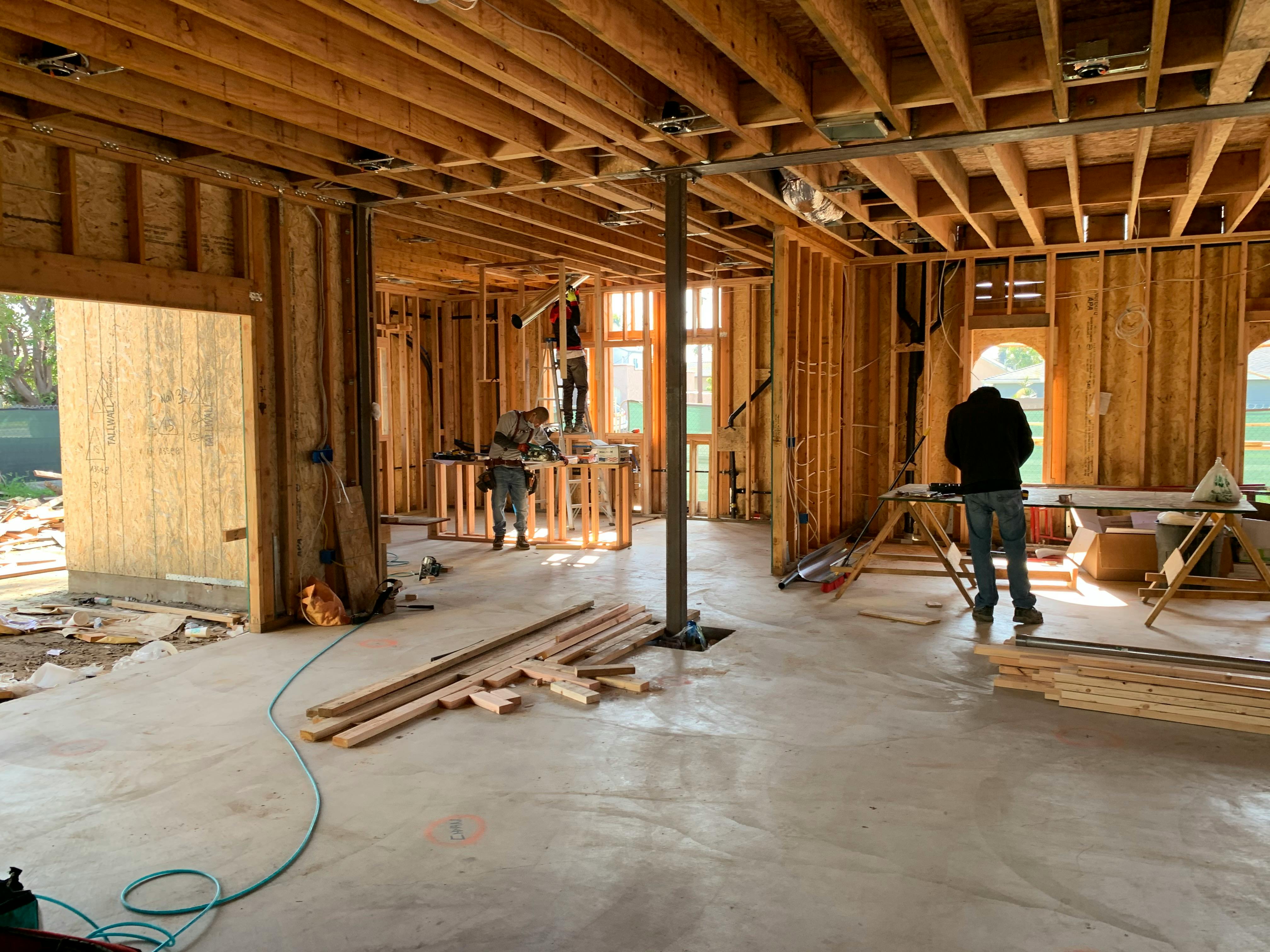
// How a Blower Door Test Works
The fan depressurizes the house to 50 Pa. Air rushes in through every gap and crack, revealing the total air leakage rate (ACH50).
Blower Door Testing for BC Builders
Key takeaway: The blower door test is the pass/fail moment in Step Code compliance. Test mid-construction to catch problems early. Budget 1.5 to 2 hours and $400 to $600 for the final test.
How the Test Works
A calibrated fan mounts into an exterior door frame and depressurizes the building to 50 Pascals, roughly a 30 km/h wind hitting every surface simultaneously. The fan measures airflow volume to maintain that pressure. Airflow divided by home volume gives you ACH50. Lower is tighter.
Standard: CGSB 149.10. Your energy advisor documents results in the as-built compliance report.
Duration: 10 to 15 minutes for the test. 1.5 to 2 hours for a complete visit with diagnostics.
ACH50 Targets by Step Level
| Step Level | ACH50 Target | Difficulty |
|---|---|---|
| Step 2 | 3.0 | Standard practice |
| Step 3 | 2.5 | Consistent air barrier detailing |
| Step 4 | 1.5 | Deliberate strategy required |
| Step 5 | 1.0 | Passive House-adjacent |
Step 4 is expected in 2027. The 40% tighter target from 2.5 to 1.5 changes the economics of air sealing entirely.
When to Test
Mid-Construction (Recommended)
After framing, insulation, and air barrier but before drywall. Every connection is visible and fixable. Builders who test mid-construction pass at significantly higher rates.
Kelowna offers a $325 rebate. Cost: $300 to $500.
Final (Required)
After construction, before occupancy. The energy advisor produces the as-built compliance report for the occupancy permit.
How to Prepare
- Design phase: Simpler geometry = fewer transitions. Engage your energy advisor early.
- Framing: Continuous bottom plate sealant is the single highest-impact detail.
- Air barrier: Continuity is everything. Every seam sealed, every penetration sealed.
- Before test day: Walk the building. Seal all penetrations: electrical, plumbing, vents, duct connections.
Common Mistakes
- Missed bottom plates. Most common leakage source. Acoustical sealant must be continuous.
- Unsealed electrical boxes. Every exterior wall box needs vapour barrier pads or airtight boxes.
- Plumbing penetrations. Consistently missed at second-floor bathroom rough-ins.
- Rim joist areas. Spray foam or rigid insulation with sealant makes a measurable difference.
- Recessed lighting. Use airtight-rated (AT) fixtures, not just IC-rated.
What to Do If You Fail
- Diagnostic first. Smoke pen or thermal camera while the blower door runs. Find the biggest leaks.
- Fix and retest. Many failures become passes within a few hours of targeted work.
- Consider AeroBarrier. Aerosol-based sealing can close the gap post-construction with real-time monitoring.
Cost of Testing in BC
| Service | Typical Cost |
|---|---|
| Final blower door test | $400 to $600 |
| Mid-construction test | $300 to $500 |
| Diagnostic session | $200 to $400 |
| Full energy advisory package | $2,500 to $4,000 |
For more on hitting your target, see our ACH targets guide or Step Code 4 guide.